Introduction
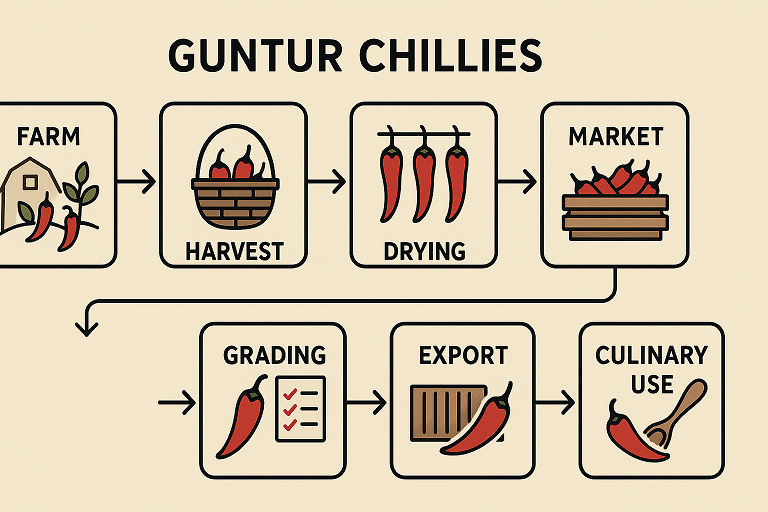
Guntur Chilli powder is made with spicy red chiles of Guntur, in the southern Indian state of Andhra Pradesh, are well-known across the world. These chiles represent culture, livelihood, and export power in addition to being a spice. A tour of Guntur Chilli powder is a colorful trip through export hubs, busy marketplaces, hardworking villages, and fertile regions. Take a deep dive into the journey of the renowned Guntur chillies from farm to dish.
1. The Origins: Land and Climate
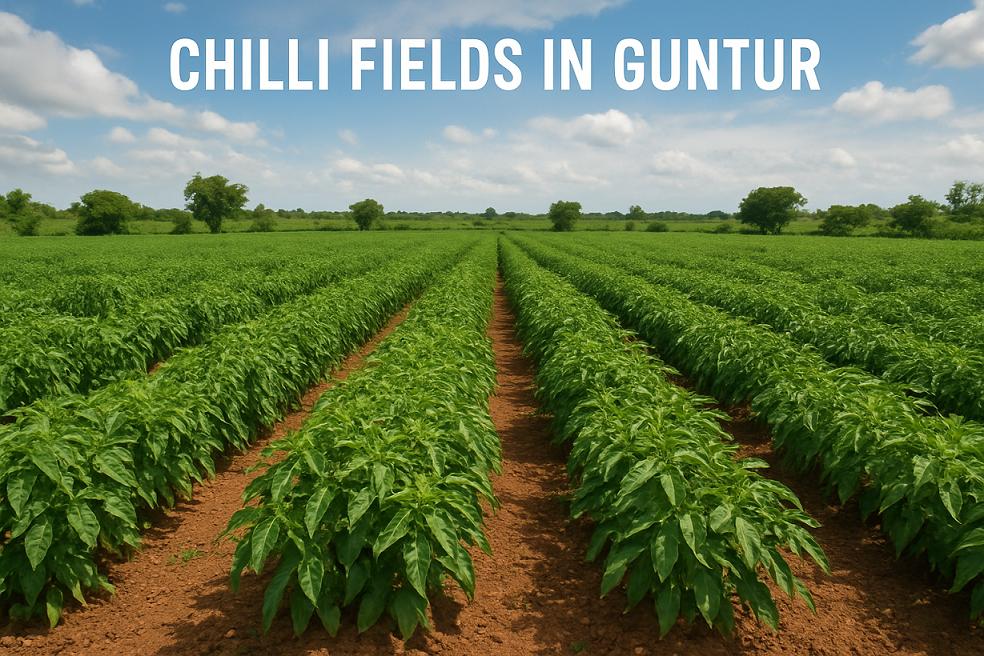
Guntur’s warm climate and black cotton soil make it an ideal place for chilli cultivation. The region receives moderate rainfall, making it perfect for growing spicy varieties like 334, Teja, and Byadgi.
2. Sowing and Cultivation
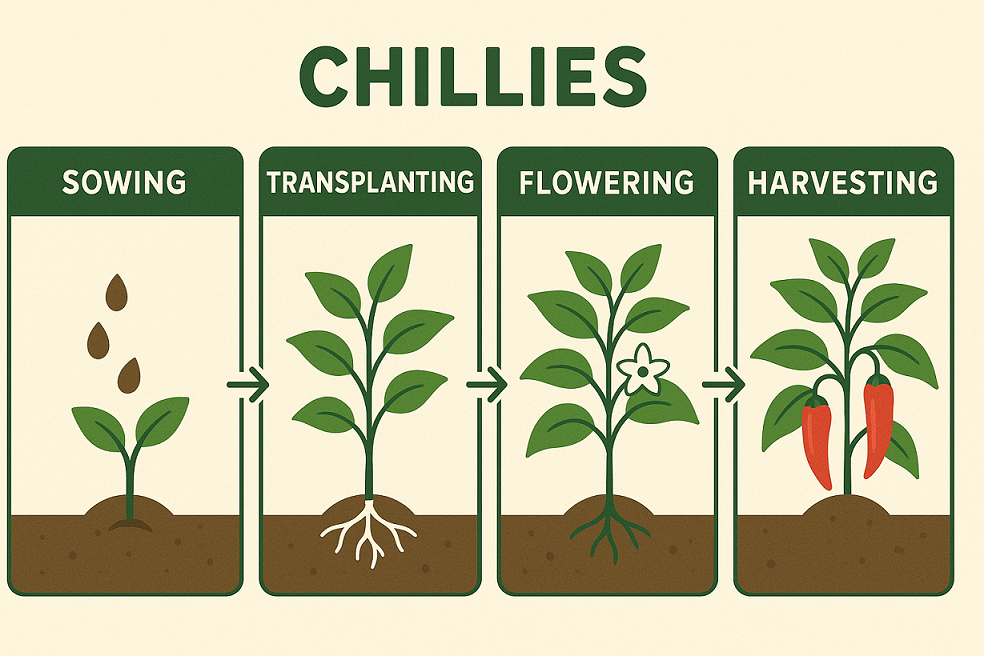
In nurseries, chilli seeds are typically sown from May to August. They are moved into the fields after roughly 30 to 40 days. To increase productivity and flavor, farmers employ conventional methods and organic fertilizers.
3. Harvesting Season
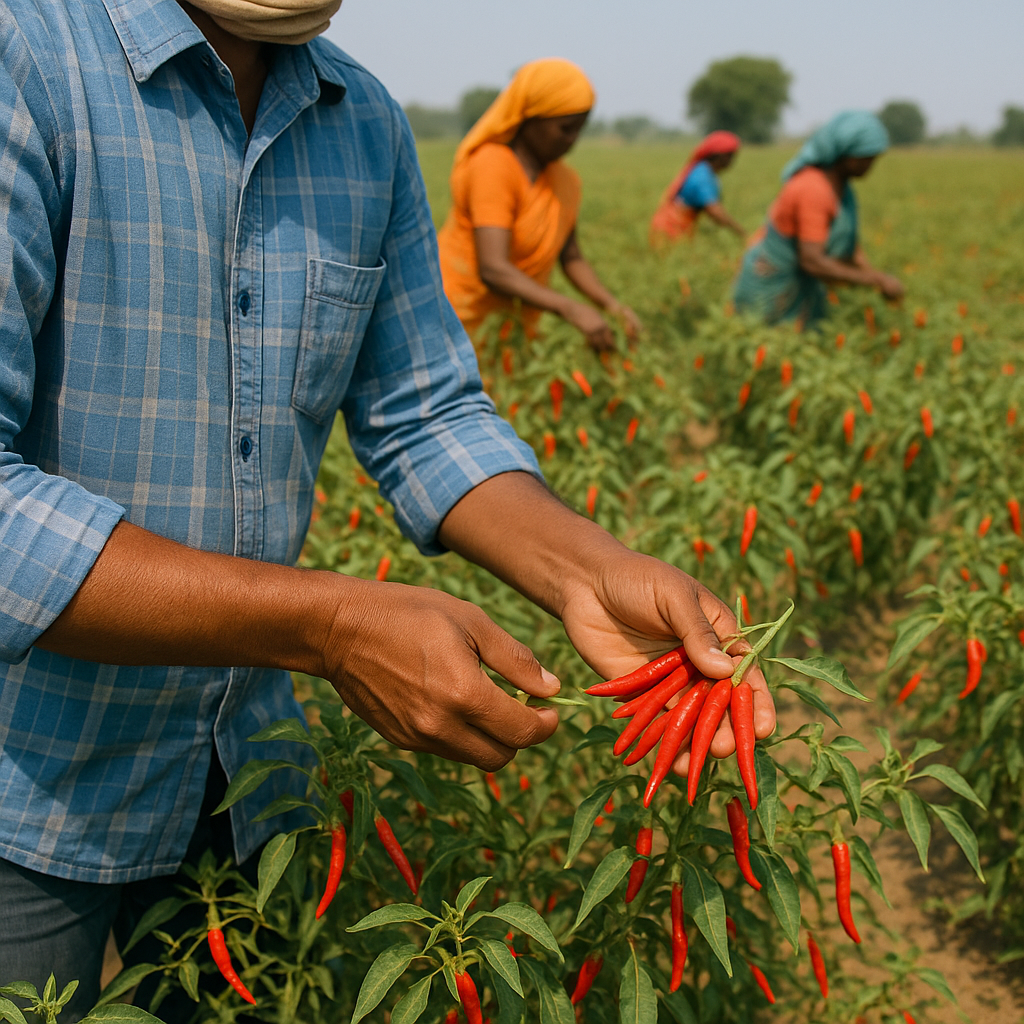
December to March is when harvesting starts. To ensure that only ripe red chilies are chosen, farmers hand-pick mature ones. Throughout the season, each plant can be harvested three to five times.
4. Sun Drying to get Natural Chilli powder
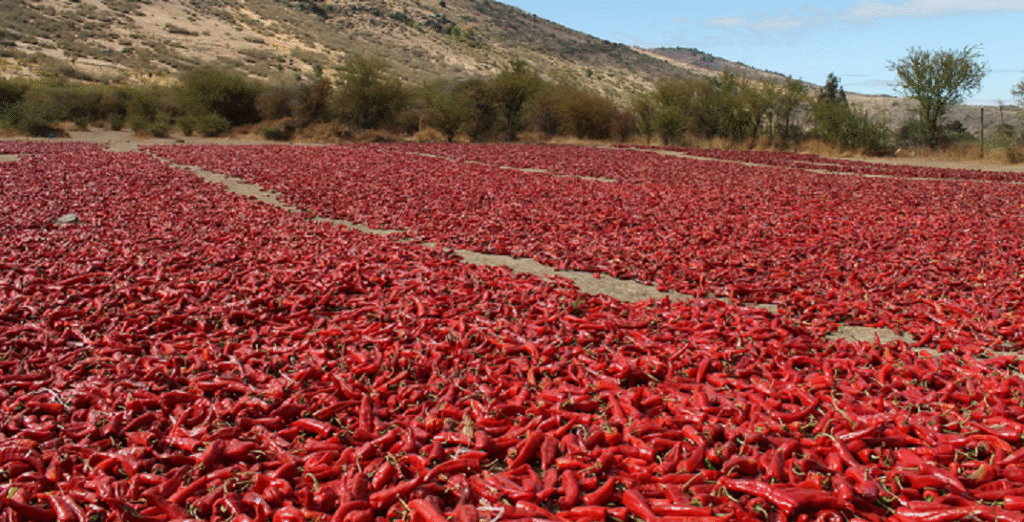
Chilies are sun-dried for several days after harvest to remove moisture. Then, either manually or using basic sorting machines, they are sorted according to color, size, and pungency.
5. Guntur Mirchi Yard
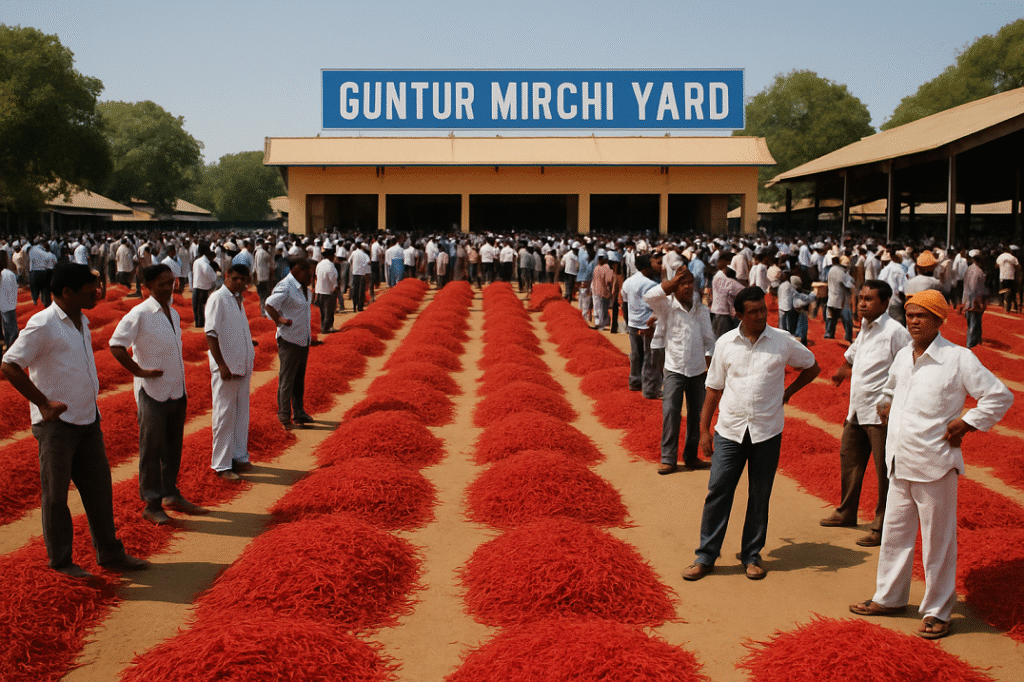
The Guntur Chilli Market Yard is Asia’s largest dry chilli market. It’s a bustling hub where chillies are auctioned, graded, and sold to traders from across India and abroad.
6. Quality Check and Grading – Key factor for Best Chilli powder
Grading is done based on the Scoville Heat Units (SHU), color value, and stem condition. Popular varieties like Guntur Sannam and Teja are known for their distinct characteristics.
| Guntur Chilli Variety | Scoville Heat Units (SHU) | Color | Common Use Cases |
| 334 (Teja) | 50,000 – 170,000 | Bright red | Pickles, powders, export markets (for pungency) |
| 273 | 25,000 – 35,000 | Deep red, glossy | Spice blends, powders, domestic use |
| Sannam-S4 | 30,000 – 50,000 | Red to deep red | Culinary use, masalas, sauces |
| Byadgi (grown in Guntur) | 8,000 – 15,000 | Deep red, wrinkled skin | Coloring agent in food, less pungent dishes |
| Wonder Hot | 40,000 – 100,000 | Red | Industrial processing, dried chilli powder |
| LCA 334 | 35,000 – 55,000 | Bright red | Powder production, culinary spice |
More information about Chilli powder
- Because of its extreme pungency, Teja 334 is the most exported Guntur chilli.
- One of the most extensively grown varieties in Andhra Pradesh, sannam-S4 is well-liked in both local and international markets.
- Despite being native to Karnataka, byadgi is also produced in Guntur because of the need for its low-heat, natural red coloring.
- Color is crucial for sauces and spice markets.
- Scoville Heat Units (SHU) measure the chilli’s level of heat; the higher the SHU, the hotter the chilli.
7. Culinary and Cultural Impact of Chilli powder
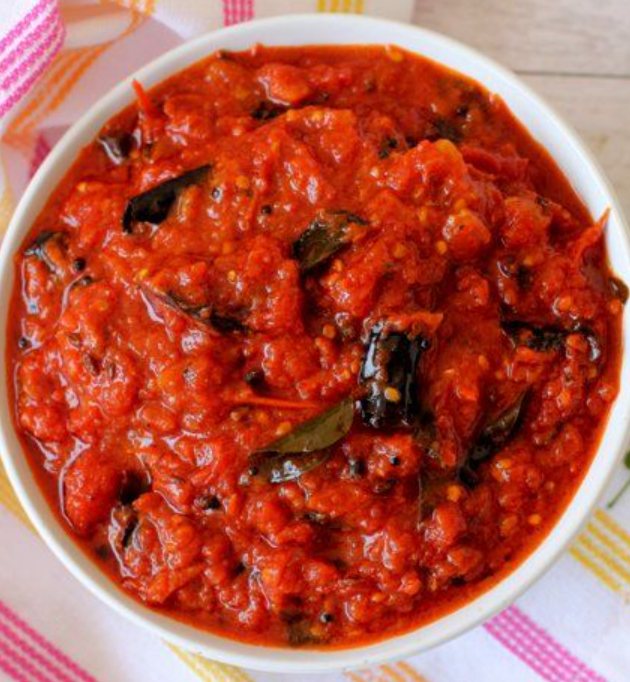
Guntur chillies are used in curries, pickles, and snacks.
Conclusion
There is more to a tour of Guntur chillies than just a spice trail. It’s a delicious tale about sweat, dirt, and the sun. Guntur chillies continue to spice up lives all over the world thanks to their meticulous cultivation by farmers and subsequent global export. This fiery journey should not be missed if you ever visit Andhra Pradesh! Know more about Organic Spices